If you are an author who has been invited to write a Perspective, please read our guidance.
Satya N. Majumdar and Grégory Schehr
Published 12 June 2026
Citation Satya N. Majumdar and Grégory Schehr 2026 EPL 155 11001
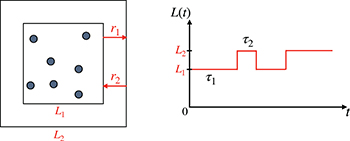
In this perspective article, we discuss the scenario of dynamically emergent correlation (DEC) arising in classical and quantum noninteracting systems when they are subjected to a common fluctuating stochastic environment. The key property of such systems is that the strong correlations between different particles emerge from the dynamics and not from built-in interactions. In many cases, these strong correlations persist even at long times in the stationary state. Computing observables explicitly for such strongly correlated states in general is very hard. Remarkably, the stationary states in several models of DEC exhibit an interesting analytical structure that allows to compute physical observables, despite being strongly correlated. Recent experiments on trapped colloidal particles have established that these DEC in the stationary state can in fact be measured. DEC is a rapidly emerging domain of strongly correlated out-of-equilibrium statistical physics, with both theoretical and experimental, as well as classical and quantum, components.
A. Octávio Soares and Nuno M. R. Peres
Published 04 May 2026
Citation A. Octávio Soares and Nuno M. R. Peres 2026 EPL 154 36001
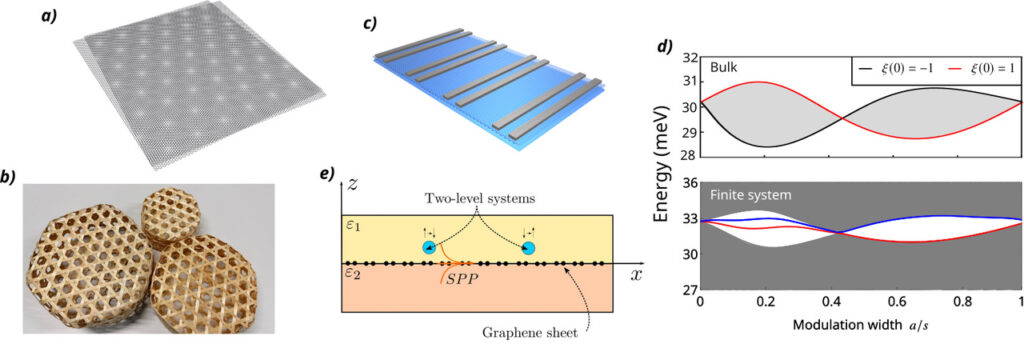
In this article, we analyze the quantum and topological properties of graphene-based plasmonic systems. We consider the following plasmonic materials: single-layer graphene, twisted bilayer graphene, and other graphene stackings, as well as the following architectures: graphene-based gratings, grids, chains of graphene disks, and the kagomé lattice.
Giulia Janzen, Gaia Maselli, Juan F. Jimenez, Lia Garcia-Perez, D. A. Matoz Fernandez and Chantal Valeriani
Published 30 April 2026
Citation Giulia Janzen et al 2026 EPL 154 37001
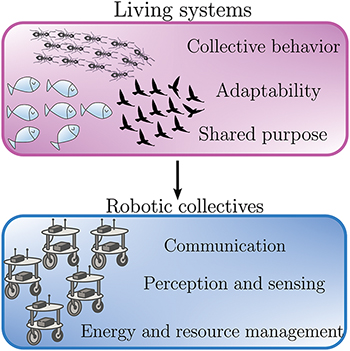
Robophysics investigates the physical principles that govern living-like robots operating in complex, real-world environments. Despite remarkable technological advances, robots continue to face fundamental efficiency limitations. At the level of individual units, locomotion remains a challenge, while at the collective level, robot swarms struggle to achieve shared purpose, coordination, communication, and cost efficiency. This perspective article examines the key challenges faced by bio-inspired robotic collectives and highlights recent research efforts that incorporate principles from active matter physics and biology into the modeling and design of robot swarms.
F. Pelusi, A. Scagliarini, M. Sbragaglia, M. Bernaschi and R. Benzi
Published 22 April 2026
Citation F. Pelusi et al 2026 EPL 154 23001
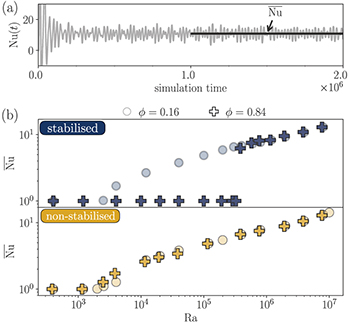
Thermally driven emulsions arise in a broad range of natural and industrial contexts, yet their fundamental physical understanding remains only partially established. Emulsions exhibit a complex, concentration-dependent rheology, ranging from Newtonian (dilute emulsions) to yield stress (concentrated emulsions). In buoyancy-driven flows, the complex structure and rheology of the emulsion are strongly coupled to convective flows, giving rise to fascinating and non-trivial phenomena involving stability, transient dynamics, and morphological evolution of the system. We review recent progress on thermally driven emulsions in the celebrated Rayleigh-Bénard configuration, offering new perspectives on the behaviour of soft materials in thermal convection.
Joe Forth, Robert Malinowski and Giorgio Volpe
Published 4 March 2026
Citation Joe Forth et al 2026 EPL 153 57002
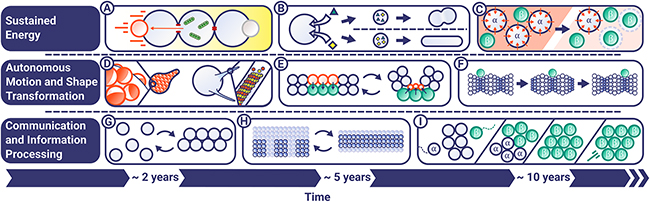
Droplets, sub-millilitre liquid volumes with at least one interface, have traditionally served as compartments for storing, transporting, and delivering materials. Beyond familiar applications in food, coatings, and consumer goods, they find cutting-edge use in energy storage, sensing, and tissue engineering. The next frontier is their integration into animate matter, emerging materials defined by their levels of activity, adaptiveness, and autonomy. Easy to produce and dispense or print into complex structures, and with enormous chemical versatility, droplets are ideal building blocks for animate matter. In this Perspective, we outline a roadmap for advancing animacy in droplets and call for a more concerted effort to integrate novel mechanisms for motility, sensing, and decision-making into droplet design. Although research on active droplets spans more than a century, achieving true autonomy, where droplets process multiple stimuli and respond without external control, remains a central challenge. We hope to inspire interdisciplinary collaboration towards applications in microfluidics, adaptive optics, tissue engineering, and soft robotics.
Dynamically emergent correlations By Satya N. Majumdar and Grégory Schehr
Towards twisted, topological, and quantum graphene plasmonics By A. Octávio Soares and Nuno M. R. Peres
Active matter as a framework for living systems-inspired Robophysics By Giulia Janzen, Gaia Maselli, Juan F. Jimenez, Lia Garcia-Perez, D. A. Matoz Fernandez and Chantal Valeriani
Rayleigh-Bénard thermal convection in emulsions: A short review By F. Pelusi, A. Scagliarini, M. Sbragaglia, M. Bernaschi and R. Benzi
How to design the perfect lecture By A. K. Wood
Seventy-five years later, the prisoner’s dilemma narrative continues to impart new wisdom By Tim Johnson and Mohammad Salahshour
Some of the many uses of scalar fields: Kinks, lumps, and geometric constraints By D. Bazeia and R. Menezes
Prediction and inference in complex networks: A brief review and perspectives By Francisco A. Rodrigues
The foundational value of quantum computing for classical fluids By Sauro Succi, Claudio Sanavio, Luca Cappelli and Peter Love
Towards animate droplets: Active, adaptive, and autonomous By Joe Forth, Robert Malinowski and Giorgio Volpe
Raiders of the lost anti-matter: Searching for CP violation using top quarks and Higgs bosons By R. Y. Peters
Thin-films–based sensors: Physics contribution to medicine, environment and food By Pedro Catalão Moura and Maria Raposo
Quantifying entanglement from the geometric perspective By Lisa T. Weinbrenner and Otfried Gühne
Shear viscosity to entropy density ratio: A powerful tool for gravity theories and strongly coupled fluids By M. Chiofalo, D. Grasso, S. Liberati and M. Mannarelli
Cooperation dynamics on higher-order networks: A brief review By Jihong Chen, Kuan Zou, Liming Zhang and Changwei Huang
The need for statistical physics in Africa: Perspective and an illustration in drug delivery problems By Mtabazi G. Sahini, Isaac Onoka, Said A. H. Vuai, Édgar Roldán, Hulda S. Swai and Daniel M. Shadrack
Recent developments and future perspectives in statistical mechanics of ecological systems By S. Azaele, A. Maritan and S. S. Suweis
Physics reveals and explains patterns in conflict casualties By Frank Yingjie Huo, Dylan J. Restrepo, Pedro D. Manrique, Gordon Woo and Neil F. Johnson
The non-Hermitian skin effect: A perspective By Julius T. Gohsrich, Ayan Banerjee and Flore K. Kunst
Network-based computational communication By Ming Huang, Jun-Ling Wang and Zi-Ke Zhang
A brief introduction to the inference of entropy production through the fluctuations of currents By A. Puglisi
Unveiling complexity: Statistical physics approaches to ecological communities By Ada Altieri and Silvia De Monte
Resilience in biomolecular networks By Tianyi Chen and Xueming Liu
The physics of seismic noise: A revolution in Earth imaging and monitoring By J. Starke, I. Wienk, R. Rousseau, N. Bontemps, L. Moreau and E. Larose
Successive lag synchronization on dynamical networks: A perspective By Jing Guan and Kezan Li
Particles and fields in minimal hydrodynamic models for active turbulence By Rahul Pandit and Kolluru Venkata Kiran
Graph neural networks for network science: A mini review By Jia Li, Yixiu Ji, Yu Zhang, Jie Ding, Cong Li and Xiang Li
Dissemination intelligence information on social media By Hao Liao, Jiwei Zhang, Wei Zhang, Zhen-Zhen Wang, Mingyang Zhou, Xiaoqun Wu and Naipeng Chao
Experimental realizations of information engines: Beyond proof of concept By Rémi Goerlich, Laura Hoek, Omer Chor, Saar Rahav and Yael Roichman
Ten years of the digital twin brain: Perspectives and challenges By Shuqi Guo, Ge Zhang, Xin Zeng, Yue Xiong, Yuanhang Xu, Yan Cui, Dezhong Yao and Daqing Guo
Attosecond microscopy —Advances and outlook By J. Vogelsang, A. Mikkelsen, C. Ropers, J. H. Gaida, M. Garg, K. Kern, J. Miao, M. Schultze and M. Ossiander
Harnessing individual nitrogen-vacancy centers with a compact and portable confocal microscope By I. Panadero, J. C. Guerra, E. Caravaca, F. J. Hidalgo, P. Acedo, C. de Dios and E. Torrontegui
Toward robust network controllability: Insights and future directions By Yang Lou, Lin Wang and Guanrong Chen
Perspectives on modelling epidemics with human mobility By Xin Lu, Jiawei Feng and Suoyi Tan
Reputation mechanisms and cooperative emergence in complex network games: Current status and prospects By Wei Tang, Hui Yang and Chun Wang
Global non-equilibrium thermodynamics for steady states like never before By R. Holyst, K. Giżyński, A. Maciołek, K. Makuch, J. Wróbel and P. J. Żuk
Evolutionary dynamics with random payoff matrices By Manh Hong Duong and The Anh Han
The absolute swampland By Astrid Eichhorn, Arthur Hebecker, Jan M. Pawlowski and Johannes Walcher
Scaling laws of urban heavy truck mobility By Xiao-Zhe Pang, Xu-Jie Lin, Yitao Yang, Erjian Liu, Xiang-Yu Jia, Ying-Yue Lv, Zile Guo, Yang Wang and Xiao-Yong Yan
A brief review on evolutionary game models for the emergence of fairness By Yanling Zhang, Yin Li and Feng Xiao
Correlated catalyst in quantum thermodynamics By Naoto Shiraishi
The unbearable lightness of restricted Boltzmann machines: Theoretical insights and biological applications By Giovanni di Sarra, Barbara Bravi and Yasser Roudi
Macroscopic arrow of time from multiscale perspectives By Mahendra K. Verma
CompLex: Legal systems through the lens of complexity science By Pierpaolo Vivo, Daniel M. Katz and J. B. Ruhl
Mobility-induced kinetic effects in multicomponent mixtures. By F. C. Thewes, M. Krüger and P. Sollich
Temporal coherences of atomic chaotic light sources: The Siegert relation and its generalisation to higher-order correlation functions. By M. Morisse, S. Joshi, J. Mika, J. C. C. Capella, R. Kaiser, R. Bachelard, L. Slodička and M. Hugbart
Dynamics of diseases spreading on networks in the forms of reaction-diffusion systems. By Gui-Quan Sun, Runzi He, Li-Feng Hou, Shupeng Gao, Xiaofeng Luo, Quanhui Liu, Yicheng Zhang and Lili Chang
Message-passing approach for percolation on the networked system: A mini-review. By Cheng Qian, Dan-Dan Zhao, Ming Zhong, Bo Zhang, Hao Peng and Wei Wang
Perspective on physical interpretations of Rényi entropy in statistical mechanics. By Misaki Ozawa and Nina Javerzat
Complex phases in quantum mechanics. By Carl M. Bender and Daniel W. Hook
Information scrambling —A quantum thermodynamic perspective. By Akram Touil and Sebastian Deffner
Tuning of magnetic bistability and domain wall dynamics in magnetic microwires. By Arcady Zhukov, Paula Corte-Leon, Ahmed Talaat, Juan Maria Blanco, Alvaro Gonzalez, Alfonso García-Gomez and Valentina Zhukova
Ultracold atomic spin mixtures in ultrastable magnetic field environments. By Riccardo Cominotti, Chiara Rogora, Alessandro Zenesini, Giacomo Lamporesi and Gabriele Ferrari
Evolutionary dynamic of division of labor games. By Chunyan Zhang and Ziheng Wang
Interplay of synchronization and cortical input in models of brain networks. By Jakub Sawicki and Eckehard Schöll
Multifactorial effects on bounded rational decision-making. By Dun Han and Xiang Li
Advanced progress of network resilience. By Min Liu, Qiang Guo and Jianguo Liu
Atomic topological quantum matter using synthetic dimensions. By A. Fabre and S. Nascimbene
Synchronization on higher-order networks. By Haoran Liu, Jin Zhou, Bo Li, Meng Huang, Jun-an Lu and Dinghua Shi
Interfacial instabilities in confined displacements involving non-Newtonian fluids. By Vaibhav Raj Singh Parmar and Ranjini Bandyopadhyay
Accelerations of large inertial particles in turbulence. By Yaning Fan, Cheng Wang, Linfeng Jiang, Chao Sun and Enrico Calzavarini
Ultracold atoms carrying orbital angular momentum: Engineering topological phases in lattices. By E. Nicolau, G. Pelegrí, J. Polo, A. M. Marques, A. J. Daley, J. Mompart, R. G. Dias and V. Ahufinger
Dynamic modeling of neuromodulation techniques: Towards elaboration and individual specificity. By Ying Yu, Fang Han and Qingyun Wang
Elasticity, plasticity and screening in amorphous solids: A short review. By Avanish Kumar and Itamar Procaccia
Quantum control by effective counterdiabatic driving. By Francesco Petiziol, Florian Mintert and Sandro Wimberger
Augmented dynamics of nonlinear systems: A review. By Nirmal Punetha, Anjuman Ara Khatun, Haider Hasan Jafri, Awadhesh Prasad and Manish Dev Shrimali
Cooperation dynamics in multiple correlated games: A review. By Ji Quan, Xiao Jian Ma, Shengjin Cui and Xianjia Wang
Coupled propagation dynamics on complex networks: A brief review. By Zhishuang Wang, Haoxian Li, Jiaxing Chen, Zhiyong Hong, Qian Yin and Chengyi Xia
European Physical Society
6, rue des Frères Lumière
68200 Mulhouse
France
tel: +33 389 32 94 40




Copyright© 2025 – EPL Association
Non-profit, community owned
Impact factor: 1.8
Submission to publication: 73 days
European Physical Society
6, rue des Frères Lumière
68200 Mulhouse
France





Copyright© 2025 – EPL Association